-
 040-3590 6315
In case of any emergency like severe pain, high fever or bleeding, please contact the above number
Make Appointment -
Call Us: +919949991115
-
 Mail Us: fertilicaivf@gmail.com
-
 Mon - Sat: 10:00 am - 6:00 pm






How Age Influences IVF Success Rates & Fertility Outcomes

How Age Influences IVF Success Rates & Fertility Outcomes
How Age Influences IVF Success Rates

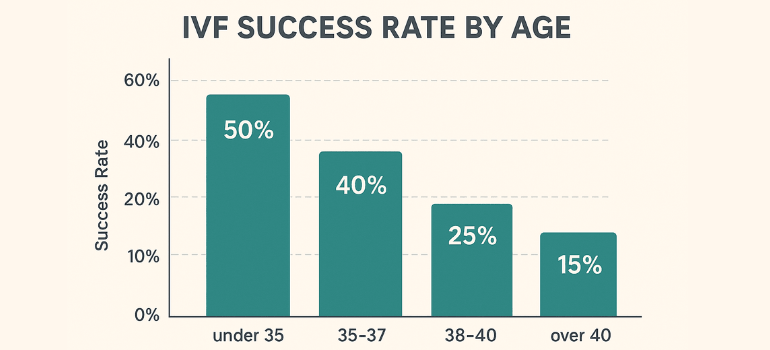
Age is one of the most decisive factors in the outcome of In Vitro Fertilization (IVF). As women grow older, natural changes in reproductive biology affect both the number and quality of eggs.
Why Age Has Such a Strong Impact on IVF
Female fertility declines over time due to biological changes. Key factors include:
- Decrease in ovarian reserve
- Reduced egg quality
- Higher probability of genetic abnormalities
These changes affect fertilization, embryo development, and implantation.
IVF Success Rates Across Different Age Groups
Under 30 Years
Women in this age group typically experience the best outcomes.
- Success rates around 50–60%
- Strong ovarian response
- Lower risk of complications
Ages 30 to 35
Fertility remains stable with slight decline.
- Success rates 40–50%
- Good egg quality
- Promising IVF outcomes
Ages 35 to 40
Fertility declines more noticeably.
- Success rates around 30–40%
- Increased reproductive conditions
- Need for advanced techniques
Over 40 Years
Fertility challenges increase significantly.
- Success rates 10–20%
- Reduced egg quality and quantity
- Higher miscarriage risk
- Donor egg IVF may be considered
The Role of Male Age in Fertility
Male age also affects fertility:
- Reduced sperm quality
- Increased DNA fragmentation
- Lower fertilization efficiency
Can IVF Compensate for Age-Related Decline?
IVF cannot fully reverse aging effects, but options include:
- Embryo freezing
- Genetic testing (PGT)
- Donor eggs
Practical Steps to Improve IVF Outcomes with Age
- Seek early fertility evaluation
- Consider egg freezing
- Maintain healthy lifestyle
- Follow medical advice strictly
The Importance of Expert Guidance
A personalized treatment plan is essential. Consulting a fertility specialist helps identify the best approach.
Conclusion
Age plays a major role in IVF success. Early action and informed decisions improve the chances of pregnancy.
Latest Blogs

50778.png "Endometriosis Awareness")